
Intro
Selecting a pressure sensor is not only about pressure range, output signal, thread type, or package size. One of the most important decisions comes earlier: choosing the correct pressure reference.
This is where many projects go wrong. An engineer may specify a suitable range and a compatible output, yet still receive readings that seem confusing in real use. In most of these cases, the issue is not that the sensor is inaccurate. The issue is that gauge, absolute, and differential pressure sensors do not measure pressure in the same way.
Each type answers a different engineering question. Gauge pressure tells you pressure relative to the surrounding atmosphere. Absolute pressure tells you pressure relative to a sealed vacuum reference. Differential pressure tells you the difference between two points in a system. If the wrong one is selected, the system may still function, but the data may not mean what the designer, buyer, or maintenance team expects.
For OEM buyers, sourcing managers, product engineers, and application engineers, understanding this difference helps avoid redesigns, false alarms, control problems, and field confusion. This article explains the practical differences between the three pressure types, their common applications, their pros and limitations, and how to choose the correct one.
Why pressure reference matters
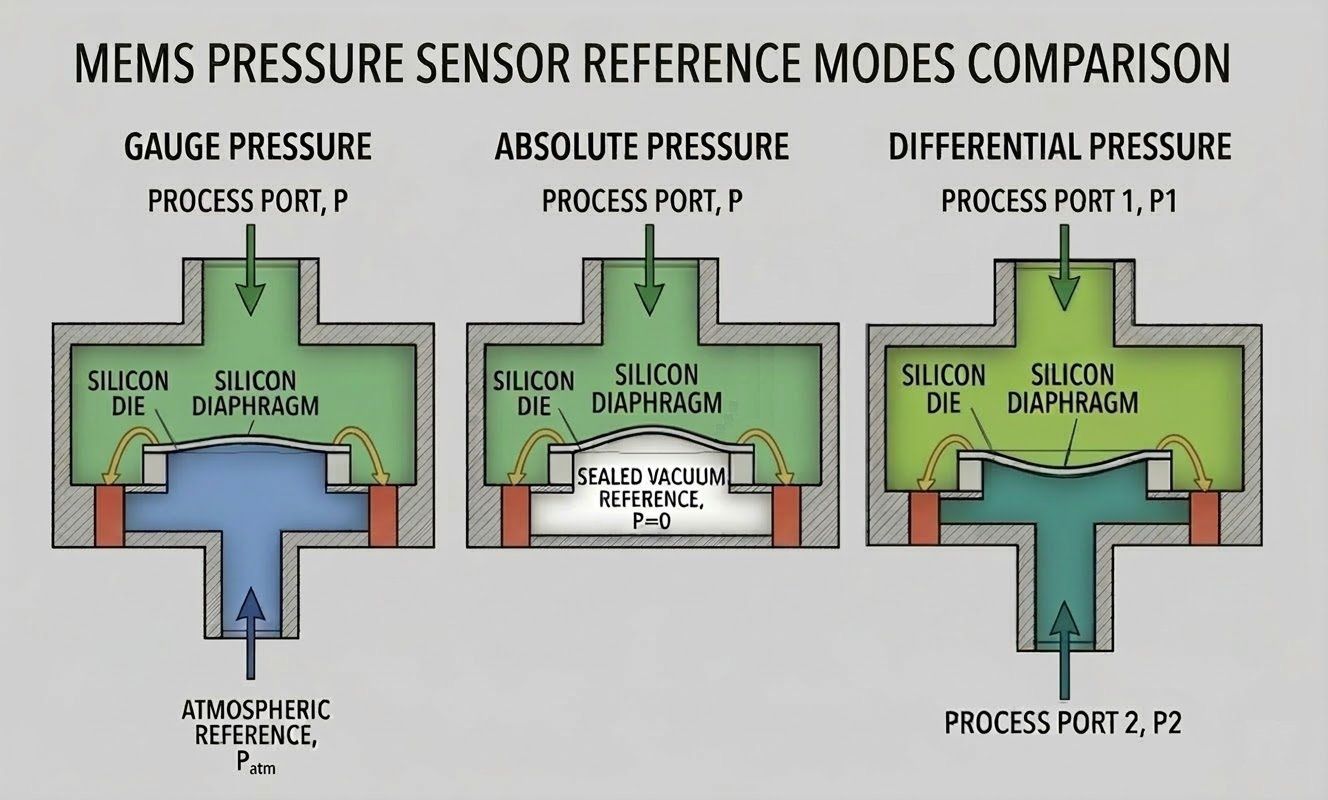
A pressure sensor always compares one pressure against a reference. That reference is what defines the meaning of the reading.
In practical terms, the reference may be:
- Local atmospheric pressure
- A sealed vacuum reference
- A second process pressure point
If the reference type does not match the application, several problems can appear:
- The displayed reading does not match what operators expect
- Two instruments on the same system appear to disagree
- Alarm thresholds are set on the wrong basis
- Control logic behaves incorrectly
- Engineers waste time checking a sensor that is actually working as designed
For example, if the goal is to monitor how much pressure an air compressor tank holds above atmosphere, gauge pressure is usually the right choice. If the goal is to monitor the true pressure in a sealed chamber regardless of weather or altitude, absolute pressure is typically more suitable. If the goal is to measure filter loading in an HVAC system, differential pressure is usually the best option because the pressure drop across the filter is what matters.
That is why the first question should not be “What pressure range do I need?” The first question should be “Pressure relative to what?”
What is a gauge pressure sensor?
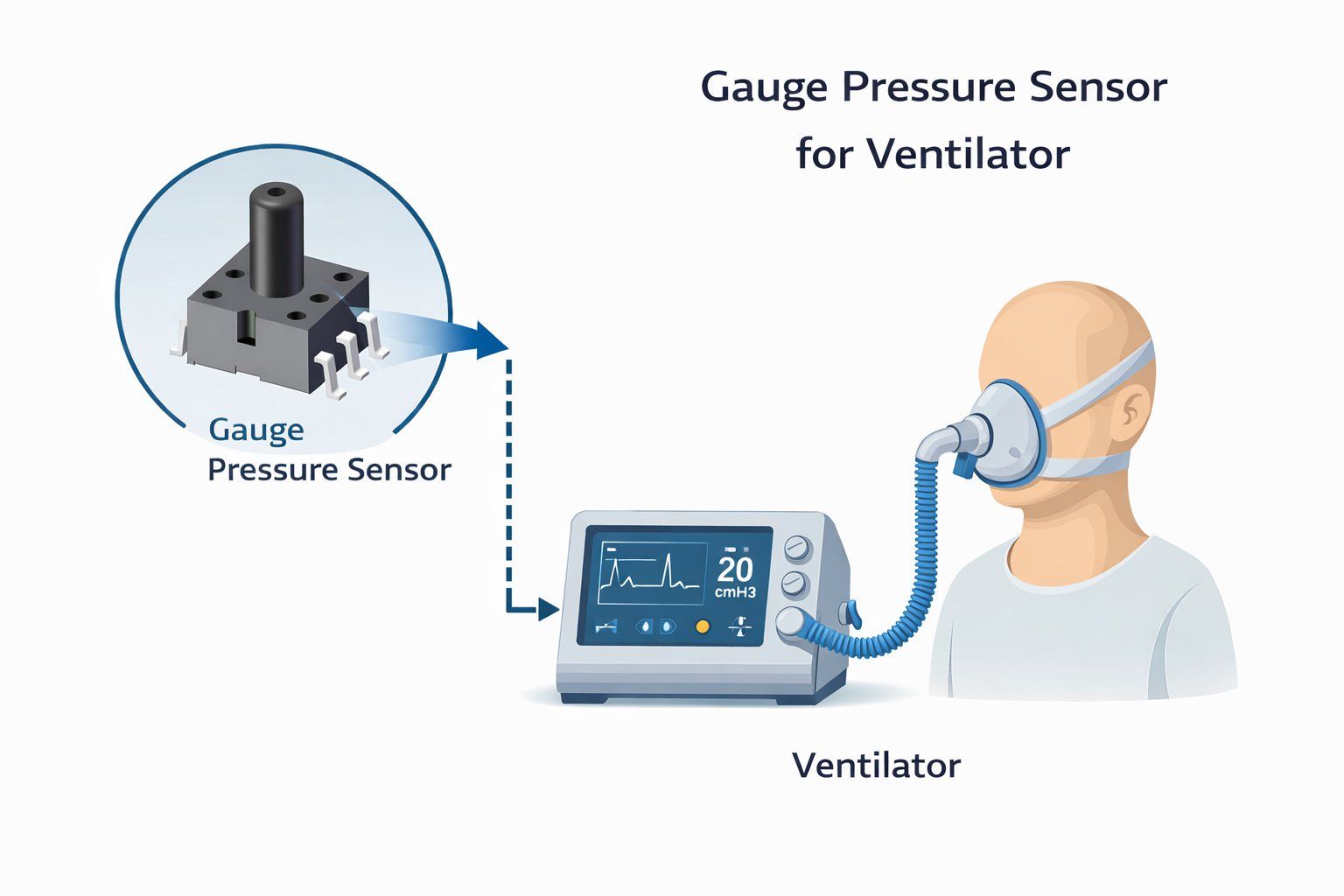
A gauge pressure sensor measures pressure relative to ambient atmospheric pressure.
In simple terms, it shows how much the process pressure is above or below the surrounding air pressure. This is the pressure reference most people are familiar with in daily industrial use.
How it works
A gauge pressure sensor uses the surrounding atmosphere as its reference. If the process pressure equals atmospheric pressure, the sensor reads zero gauge. If the process rises above atmospheric pressure, the reading becomes positive. If it falls below atmospheric pressure, the reading becomes negative.
Typical applications
Gauge pressure sensors are widely used in:
- Air compressors and pneumatic systems
- Hydraulic equipment
- Water pumps and fluid control systems
- Industrial machinery and automation equipment
- General process pressure monitoring
- Many pressure transmitter installations in OEM equipment
Advantages
- Easy to understand for operators and maintenance staff
- Matches the way many industrial pressures are specified
- Suitable for systems that naturally reference atmosphere
- Common in industrial pressure transmitters
Limitations
- The reading changes with atmospheric pressure variations
- Not ideal when a stable vacuum-based reference is required
- Can be misleading in sealed or altitude-sensitive applications
Practical example
If an air compressor receiver is operating at 8 bar gauge, that means the internal pressure is 8 bar above local atmospheric pressure. For compressor control and service work, that is usually the most practical value.
What is an absolute pressure sensor?
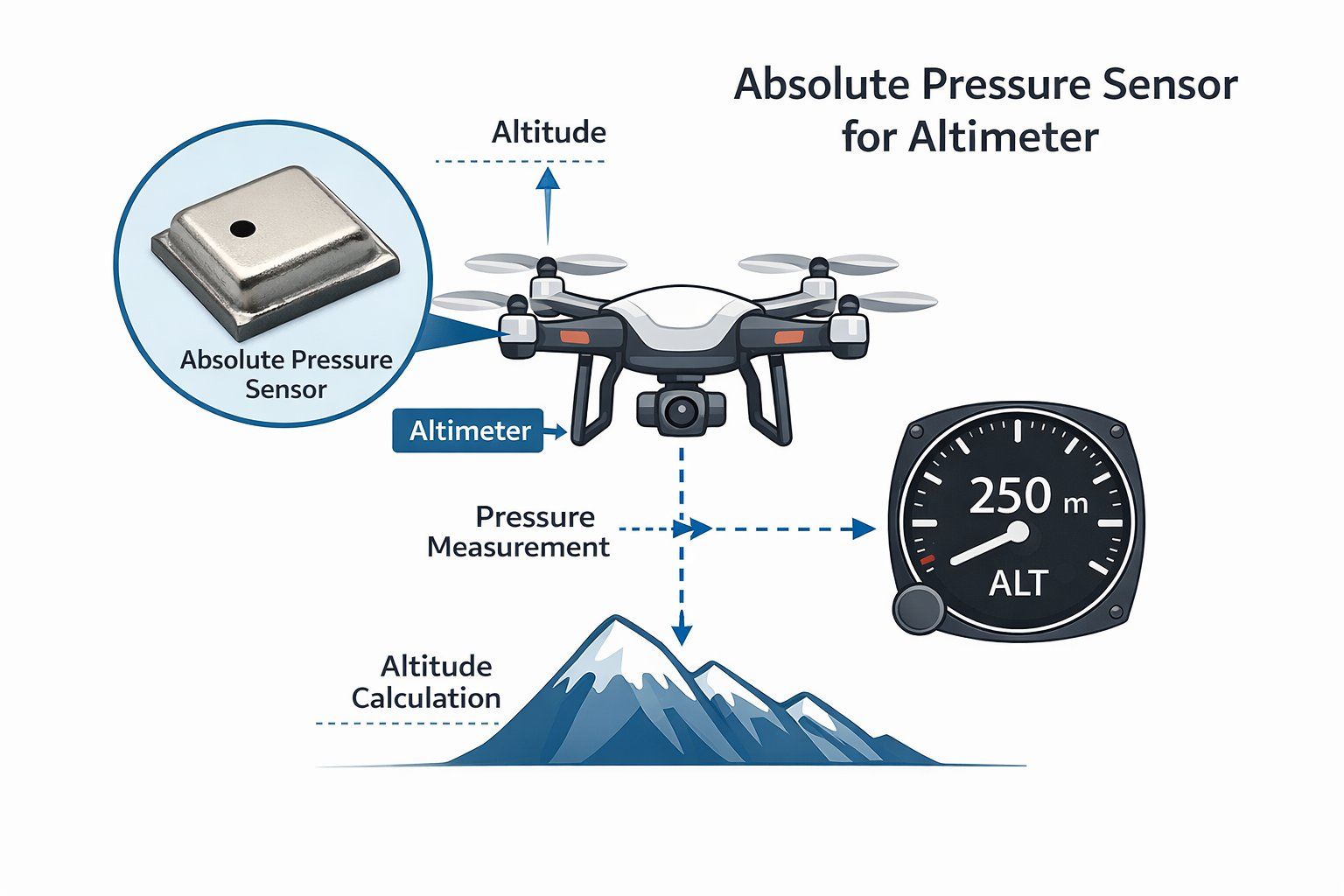
An absolute pressure sensor measures pressure relative to a sealed vacuum reference.
Because the reference is fixed, the reading does not directly depend on changes in the surrounding atmospheric pressure. This makes absolute pressure useful whenever true physical pressure must be known.
How it works
Inside the sensor, one side of the sensing element is referenced to a sealed vacuum. Zero on an absolute scale means complete vacuum. As process pressure increases, the measured value rises from that zero point.
Typical applications
Absolute pressure sensors are commonly used in:
- Barometric pressure measurement
- Altitude-related systems
- Vacuum monitoring
- Sealed chamber measurement
- Some medical and laboratory equipment
- Engine or intake measurements where true pressure matters
Advantages
- Independent of normal atmospheric pressure changes
- Suitable for vacuum and altitude calculations
- Useful when the process must be measured against a fixed reference
- Better choice for sealed systems where ambient changes should not affect the result
Limitations
- Less intuitive in applications where users expect gauge readings
- May require conversion when compared with gauge-based specifications
- Can create confusion in systems designed around pressure above atmosphere
Practical example
In a vacuum or sealed package application, absolute pressure often gives the more meaningful reading because the engineer needs the real pressure inside the chamber, not simply the pressure difference relative to the room.
What is a differential pressure sensor?
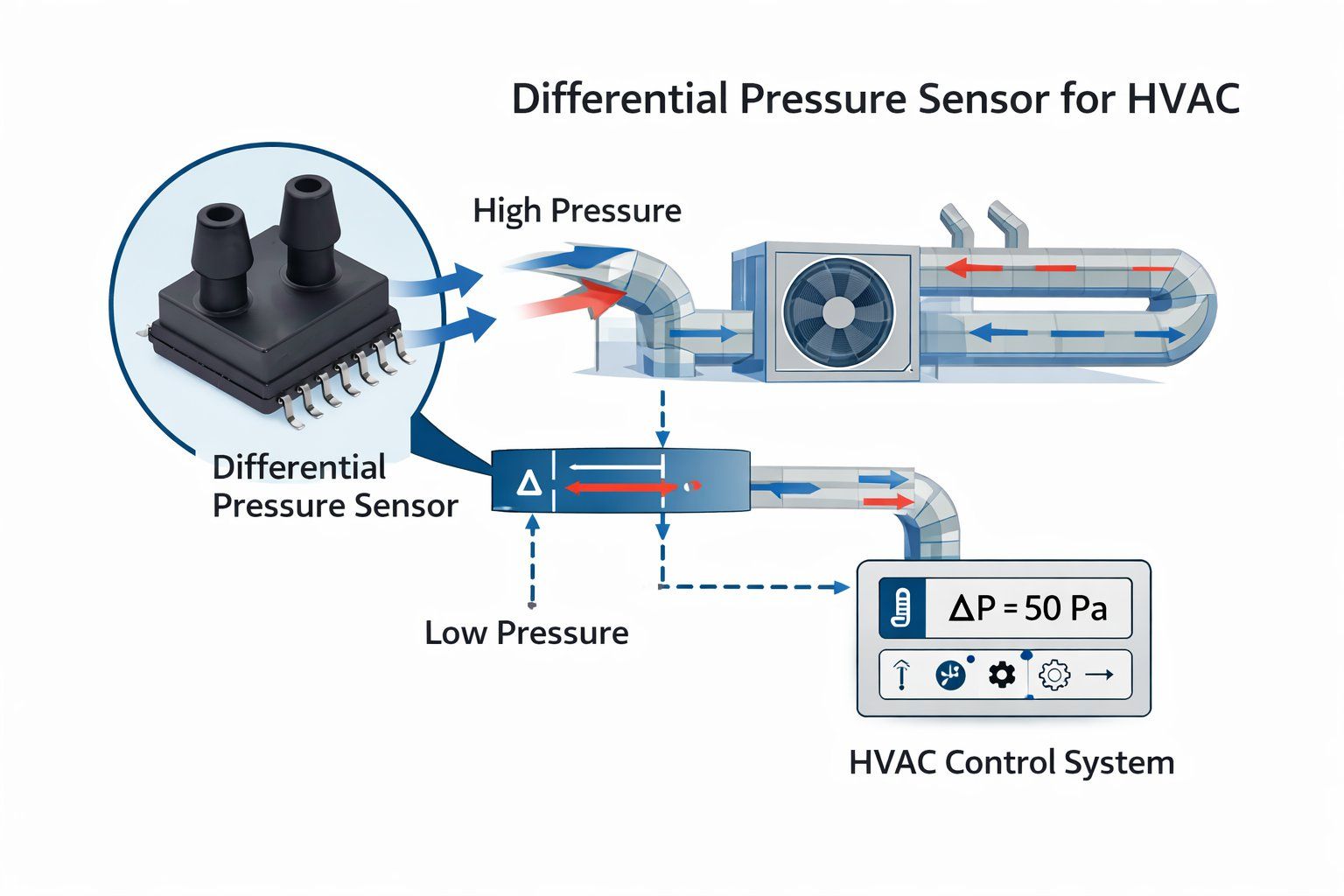
A differential pressure sensor measures the pressure difference between two separate pressure points.
Instead of comparing one pressure to atmosphere or vacuum, it compares one side of the process to another side of the process.
How it works
A differential sensor has two pressure ports, often called high side and low side. The output represents the difference between those two pressures. If both sides are equal, the differential reading is zero.
Typical applications
Differential pressure sensors are commonly used in:
- HVAC filter monitoring
- Cleanroom and isolation room pressure control
- Airflow monitoring in ducts
- Flow measurement across restrictions or orifice elements
- Medical breathing and respiratory equipment
- Liquid level measurement in closed tanks
- Monitoring pressure drop across filters, valves, or pumps in fluid systems
Advantages
- Directly measures pressure drop or pressure imbalance
- Very useful when the relationship between two points matters most
- Well suited for airflow, filter, and system-balance measurements
- Often the correct choice for room pressure control and filter condition monitoring
Limitations
- Installation quality has a strong effect on results
- Tubing errors, blocked ports, or condensation can cause false readings
- Not necessary when only one process point needs to be measured
Practical example
In an HVAC air filter application, the actual engineering question is not “What is the line pressure?” but “What is the pressure drop across the filter?” That makes differential pressure the logical choice.
Quick comparison of pressure reference types
Gauge pressure
- Reference: Atmospheric pressure
- Measures: Pressure above or below ambient
- Typical uses: Air compressors, pumps, hydraulics, and industrial machinery
- Main advantage: Easy to interpret in open industrial systems
- Main limitation: Influenced by atmospheric pressure
Absolute pressure
- Reference: Sealed vacuum reference
- Measures: True pressure from absolute zero
- Typical uses: Vacuum systems, altitude measurement, sealed chambers, and barometric applications
- Main advantage: Stable reference independent of ambient conditions
- Main limitation: Less intuitive where gauge pressure is normally used
Differential pressure
- Reference: Second process pressure point
- Measures: Pressure difference between two locations
- Typical uses: HVAC filters, airflow monitoring, room pressure control, and flow restriction measurement
- Main advantage: Best for pressure drop and balance measurement
- Main limitation: Installation errors can affect accuracy
Where each type is used in real applications
HVAC systems
HVAC systems often use differential pressure sensors to monitor air filters, airflow restrictions, and room pressure control. When the goal is to determine whether a filter is becoming blocked, the pressure drop across the filter is much more useful than the absolute duct pressure.
Gauge pressure may still be used in certain process-side or refrigerant-related measurements, but differential pressure is generally the preferred method for filter and airflow monitoring.
Medical devices
Medical equipment may use different pressure references depending on the function:
- Differential pressure for comparing two points in an air path
- Absolute pressure when a stable fixed reference is required
- Gauge pressure when the process must be understood relative to ambient conditions
Because medical systems can be sensitive to small measurement errors, the required pressure reference should be defined clearly at the beginning of the design process.
Air compressors
Air compressors usually use gauge pressure because users, technicians, and controllers normally think in terms of pressure above atmosphere. Receiver pressure, line pressure, and switch thresholds are commonly specified this way.
Using an absolute pressure sensor in such a system is possible, but it may create unnecessary conversion and interpretation problems unless the control system specifically requires absolute values.
Fluid systems
Fluid systems may use all three pressure references depending on the task:
- Gauge pressure for line pressure and pump discharge pressure
- Differential pressure for filter pressure drop or valve restriction monitoring
- Absolute pressure for sealed vessels or vacuum-assisted processes
That is why a specification should never stop at pressure range alone. The reference type must also be confirmed.
Common mistakes when choosing a pressure sensor
Specifying range without specifying reference
A request for 0 to 10 bar is incomplete. It should clearly state whether the requirement is 0 to 10 bar gauge, 0 to 10 bar absolute, or a 0 to 10 bar differential range.
Using gauge pressure where atmospheric effects should be excluded
If the application depends on true pressure independent of altitude or weather, gauge pressure may introduce unwanted variation.
Using absolute pressure where operators expect gauge values
In many industrial environments, operators and technicians are trained to think in gauge pressure. If the system is designed around gauge values, an absolute pressure sensor can create confusion even when it is technically accurate.
Choosing differential pressure without reviewing installation details
Differential measurement depends not only on the sensor itself but also on correct tubing layout, correct port assignment, and a clean measurement path. Poor installation can lead to misleading readings.
Which type should you choose?
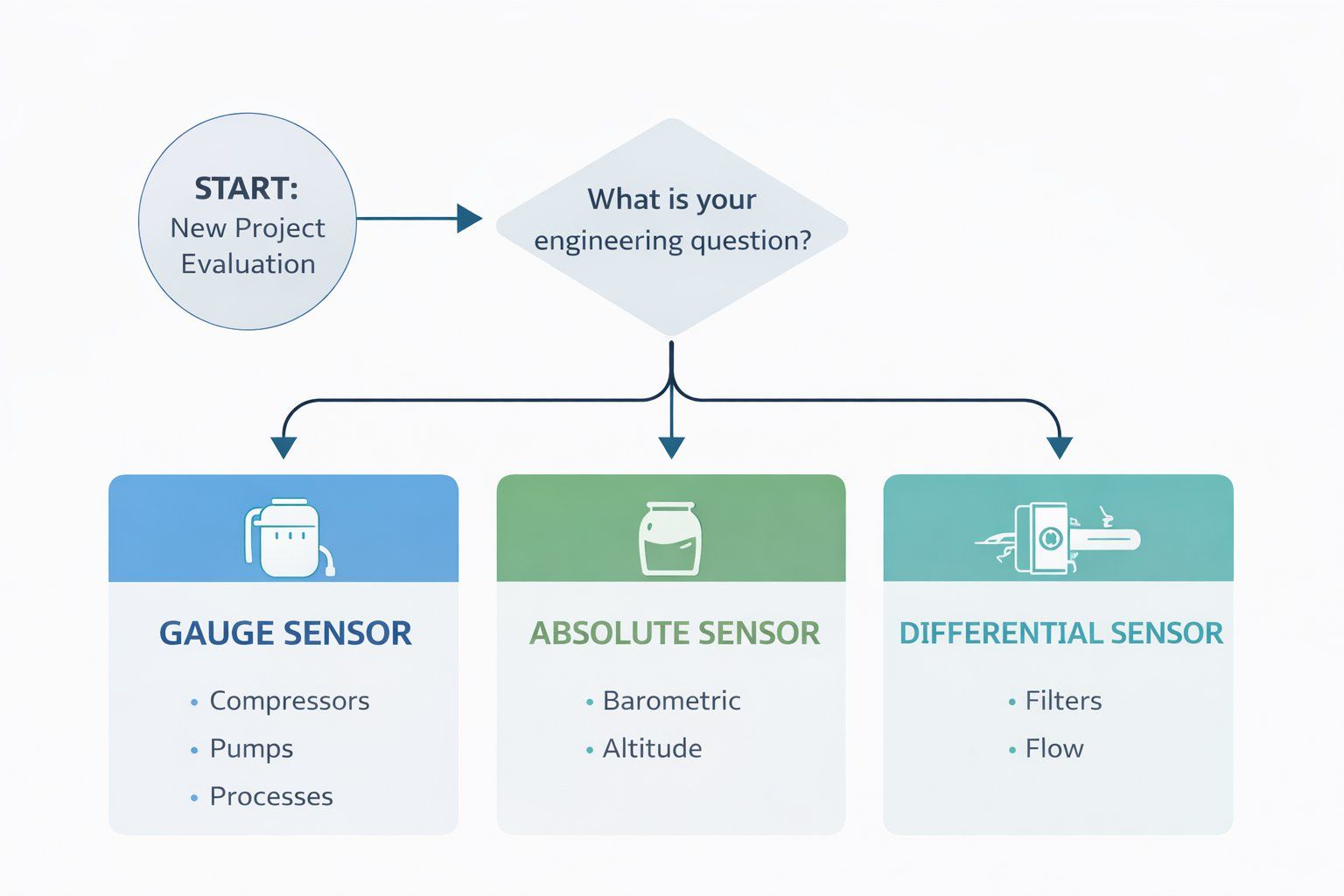
The most reliable way to choose is to define the engineering question first.
Choose gauge pressure if:
- You need pressure relative to the surrounding atmosphere
- The application is a compressor, pump, hydraulic system, or general industrial process
- Operators and controllers expect pressure above ambient
Choose absolute pressure if:
- You need a fixed reference independent of local atmosphere
- The application involves vacuum, altitude, or a sealed chamber
- The system requires true physical pressure rather than pressure relative to ambient
Choose differential pressure if:
- You need the pressure drop across a filter, valve, or restriction
- You need airflow or room pressure balance information
- The difference between two points is more important than either individual pressure
A simple decision method is to ask:
- How much pressure is above atmosphere? Choose gauge pressure.
- What is the real pressure inside the process regardless of atmosphere? Choose absolute pressure.
- What is the pressure difference between two locations? Choose differential pressure.
Choose the right pressure reference
Gauge pressure: compares process pressure with the surrounding atmosphere. Browse gauge pressure sensors.
Differential pressure: compares pressure between two process points. Browse differential pressure sensors.
Absolute pressure: compares process pressure with a sealed vacuum reference. Browse absolute pressure sensors.
Before selecting a part number: confirm the required range, output, package, media compatibility, temperature grade, and current datasheet. Contact Reliava engineering.
Related product examples
After the correct pressure reference is defined, the next step is to review pressure range, output format, media compatibility, packaging, and installation method. As brief examples only, Reliavatech models such as RP3011, RP3112, and RP3211 may be relevant starting points depending on the application and integration requirements.
FAQ
Can a gauge sensor be used instead of an absolute sensor?
Not usually if the application requires a true vacuum-based reference. A gauge sensor references atmosphere, so it will not provide the same engineering value as an absolute sensor.
Why do two pressure sensors on the same system show different values?
They may be using different reference types. A gauge sensor and an absolute sensor can both be correct while displaying different readings.
Is differential pressure only for low-pressure air applications?
No. Differential pressure measurement is also widely used in liquid systems and other process applications whenever the difference between two points is the important value.
Conclusion
Gauge, absolute, and differential pressure sensors are designed for different measurement tasks. Gauge pressure is usually the best choice when measuring pressure relative to ambient atmosphere. Absolute pressure is preferred when a stable vacuum reference is required. Differential pressure is the correct choice when pressure drop or pressure balance between two points matters most.
For engineers and technical buyers, selecting the correct pressure reference early helps avoid common sourcing and application mistakes. Once the reference type is correct, it becomes much easier to choose the right pressure range, output signal, material configuration, and package style.
CTA paragraph
If you are evaluating a pressure measurement project and are not fully sure which pressure reference is appropriate, contact Reliavatech for full specifications and practical guidance on selecting a suitable model for your application.